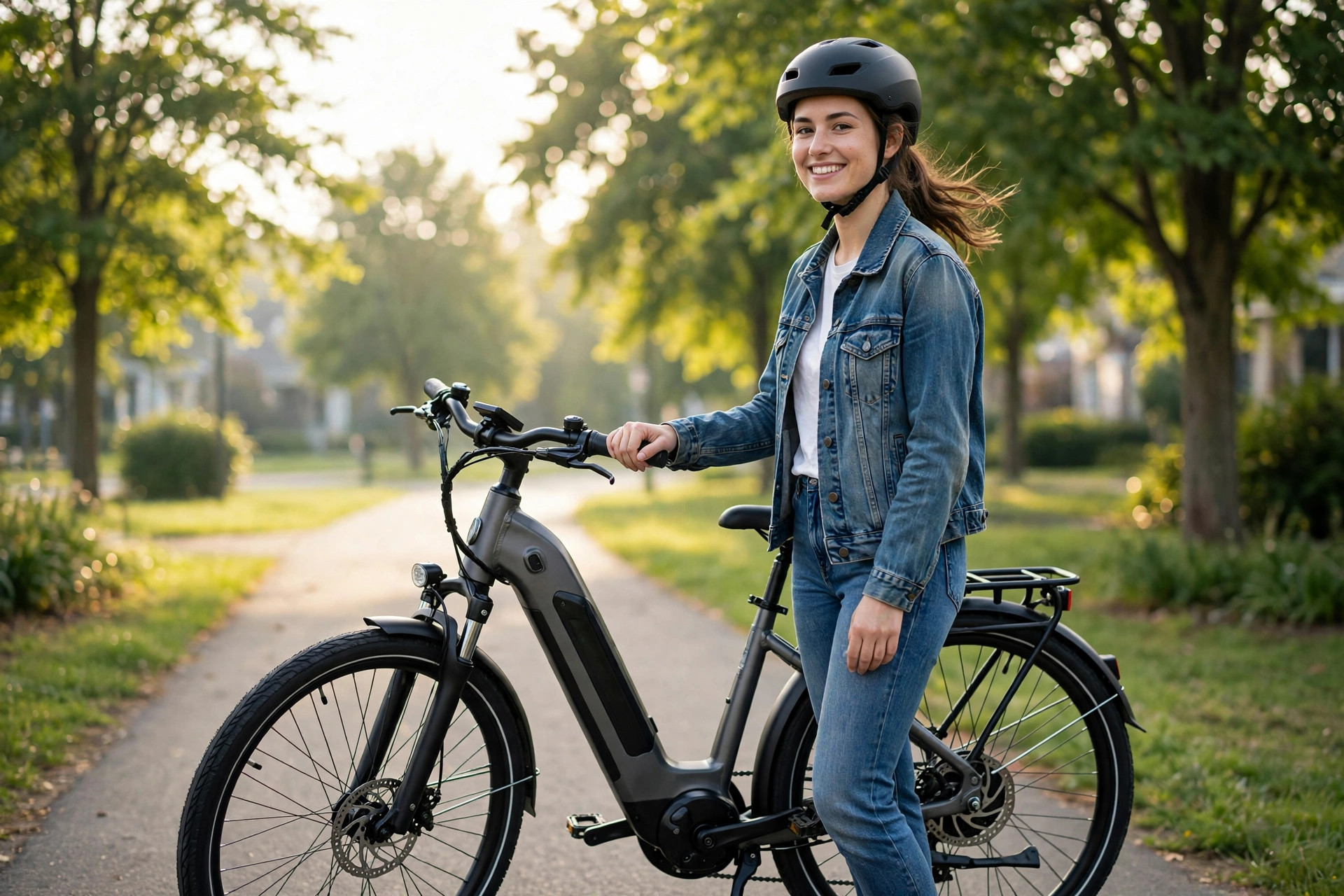
An ebike is the rare purchase where ten minutes of education saves hundreds of dollars and genuine regret. The market is full of bikes that are wrong for their buyers in predictable ways — wrong class for the local trails, wrong motor for the hills, wrong brand for getting it fixed. Here's everything that matters, before you spend.
The 3-class system, plainly
The US uses a three-class model law (adopted in some form by 43+ states). All classes are capped at 750W with no license, registration, or insurance required:
- Class 1: pedal assist only, motor cuts out at 20 mph. The "just a bike, but easier" class.
- Class 2: adds a throttle (no pedaling needed), motor cuts out at 20 mph. The most versatile for most buyers.
- Class 3: pedal assist only, motor cuts out at 28 mph, usually requires a speedometer. The fast commuter class.
Why it matters: Class 1 and 2 are generally allowed wherever traditional bikes go — bike lanes, paths, trails. Class 3 is often restricted from slower multi-use paths and may require riders 16+ and helmets. If your commute uses a shared trail, a Class 3 might be legally excluded from exactly the route you bought it for. Check your state and local rules before choosing.
Motor wattage: what the numbers mean in practice
250W: flat urban commuting for lighter riders; quiet and efficient. (Also the EU road-legal cap, if that matters to you.) Adequate on flats, wheezy on hills.
500W: the balanced everyday choice — handles mild hills and average riders without drama. Most commuters land here happily.
750W: the US sweet spot and the federal cap. Hills, heavier riders, cargo and fat-tire bikes, strong acceleration. If your route has real grades or you carry kids or cargo, start here.
Two things the wattage number hides: torque (Nm) matters more than watts for climbing — a mid-drive 500W motor with 85+ Nm out-climbs a hub-drive 750W with 60 Nm. And higher wattage drains the battery faster, so range and power trade against each other. Don't buy watts you won't use; buy torque for the hills you have.
Weight: the spec nobody thinks about until the stairs
The average ebike weighs 50–70 lbs — roughly 20 lbs more than a regular bike, with the battery (6–10 lbs) and motor (6–12 lbs) doing most of it. That weight is invisible while riding and very visible everywhere else:
- Carrying it up apartment stairs daily gets old fast — plan your storage before you buy.
- Car racks have weight limits; many standard racks top out below a two-ebike load. Check the rating.
- At low speed and in tight turns, the weight makes the bike less forgiving. Test ride if you can.
If you live upstairs with no elevator, a lighter 40-something-lb model (or a folding ebike you can wheel) is worth real money over a 70-lb bargain.
Where you can legally ride
Bike-lane and path access varies by state and sometimes by city park. The general shape: Class 1 and 2 go most places bikes go; Class 3 faces restrictions on shared paths; some trails ban all ebikes. The only safe move is checking your specific state and local rules — a five-minute search beats a ticket or a confiscated ride. When in doubt, Class 1 is the least restricted everywhere.
Serviceability: who fixes it when it breaks
This is the sleeper issue that bites a year in. Direct-to-consumer brands are cheaper (no showroom overhead), but many brick-and-mortar bike shops refuse to service bikes they didn't sell — liability concerns are real. Cheap no-name bikes can become unfixable when the brand vanishes and takes its proprietary parts with it.
Before buying: research local repair options. Call a shop and ask whether they service the brand you're considering. Brands with dealer or service networks cost more upfront and save you later. And confirm the brand will sell you a replacement battery in four years — that's the part you'll definitely need.
True total cost of ownership
The sticker price is the down payment. Budget honestly:
- The bike: ~$1,000 at the absolute low end for something decent; $1,500–$3,000 is the mainstream quality band. See best electric bikes under $1,000.
- Helmet: non-negotiable — see best helmets.
- Lock: ~$75 for a real U-lock. Cable locks don't count.
- Lights: ~$50 for a USB-rechargeable set.
- Mirror + phone mount: ~$45 together.
- Future battery: $550–$900 in 3–5 years for a mid-range pack.
A $1,000 bike is really a ~$1,250 first year and ~$2,000 over five years. That's still dramatically cheaper than car ownership — but go in with eyes open and you won't be surprised.
Frequently asked questions
Do I need a license or insurance for an ebike?
No — Class 1, 2, and 3 ebikes (under 750W) require no license, registration, or insurance under the model law most states follow. (Ebike-specific insurance exists and is worth considering for expensive bikes, but it isn't legally required.)
Can I ride an ebike in the rain?
Yes — reputable ebikes are built for it, with sealed electronics and water-resistant ratings. Don't submerge the motor or blast the battery with a pressure washer, and dry the bike afterward.
How far can I really go on a charge?
Budget 60–70% of the claimed range for normal riding. See our battery guide for the full breakdown on reading range claims.